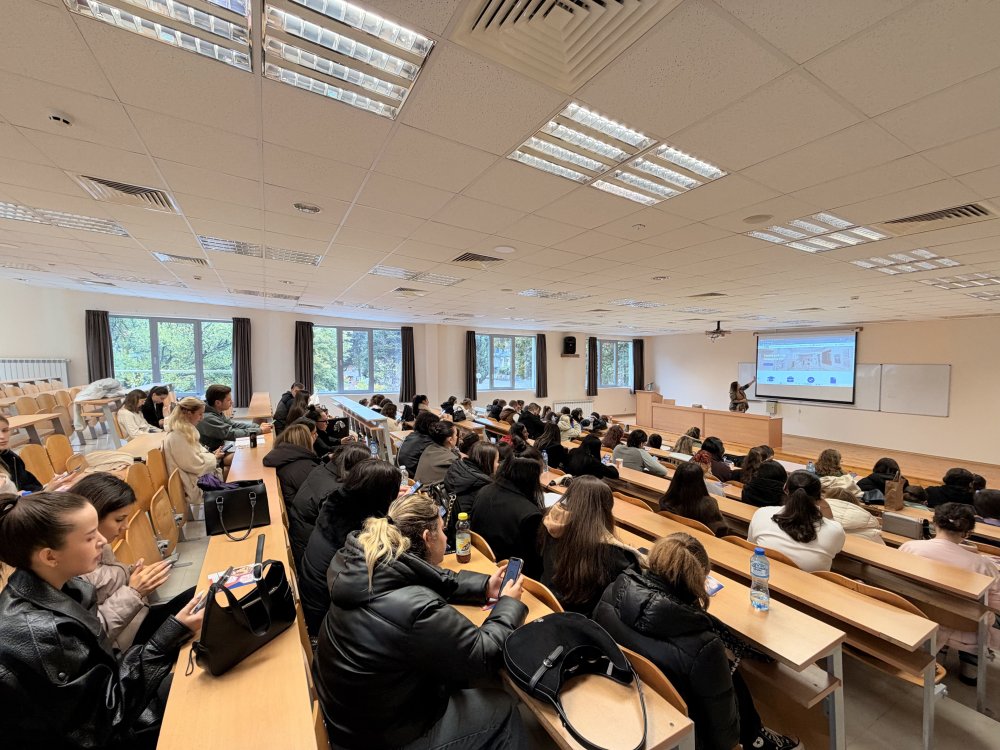
Last semester, alongside many workshops, you joined a session focused on how NotebookLM supports teaching practice. You explored core features for organizing sources, generating summaries, and supporting lesson preparation.
Since then, NotebookLM has released a new version with added capabilities to work with learning materials. Updates focus on faster synthesis, clearer source grounding, and stronger support for student facing activities.
This 16 minute video shows 12 concrete ways educators use NotebookLM to support learners and improve teaching practice:
https://youtu.be/j3FObGgTjtE?si=KPUl5BYQCws9i29-
Examples highlighted in the video include:
In regard to another AI tool by Google - Gemini Deep Think and its advanced variants, a collective of researchers from different universities are sharing case studies.
Main takeaways from the article:
The paper documents multiple cases where Gemini supported progress on open problems, conjectures, and proofs in theoretical computer science, mathematics, economics, and physics. Examples include resolving parts of the Courtade–Kumar conjecture and proving the “Simplex is the Best for Graph Embeddings” conjecture.
Successful outcomes rely on researchers guiding the model through:
The model frequently identifies relevant ideas, theorems, or analogies from other fields. Examples include applying measure theory, functional analysis, or geometric results such as the Kirszbraun Extension Theorem to graph theory and optimization problems.
When prompted with explicit self-critique protocols, Gemini detects subtle logical gaps, incorrect assumptions, and flawed definitions in existing proofs. One case study shows the model identifying a serious flaw in a cryptography paper that standard review missed.
The article shows how Gemini generates counterexamples, verifies small cases through code, and participates in neuro-symbolic loops where numerical checks guide symbolic reasoning. This approach improves reliability before formal proof writing.
You act as an orchestrator who sets goals, evaluates correctness, and decides which directions to pursue. The model handles exploration, draft proofs, and alternative strategies. This division of labor reduces time spent on technical execution.
As AI speeds up proof generation and paper writing, peer review and validation emerge as the limiting factors. The authors argue for AI-assisted review systems and formal verification pipelines using tools such as Lean or Coq.
The distilled techniques include iterative dialogue, adversarial self-review, cross-pollination of ideas, formal checks, and agentic tool use. These practices form a practical framework you can adapt for advanced research workflows.
Overall, the article positions Gemini as a credible research collaborator when you apply disciplined prompting, verification, and domain expertise, and when you treat AI output as a hypothesis generator rather than an authority.
Share your interest in a follow up NotebookLM and Gemini workshops this coming semester. You can also share how you approach teaching and learning with Google AI tools in your courses.
Follow us on our social media: https://www.linkedin.com/feed/update/urn:li:activity:7425461796255322112
06 фев 2026