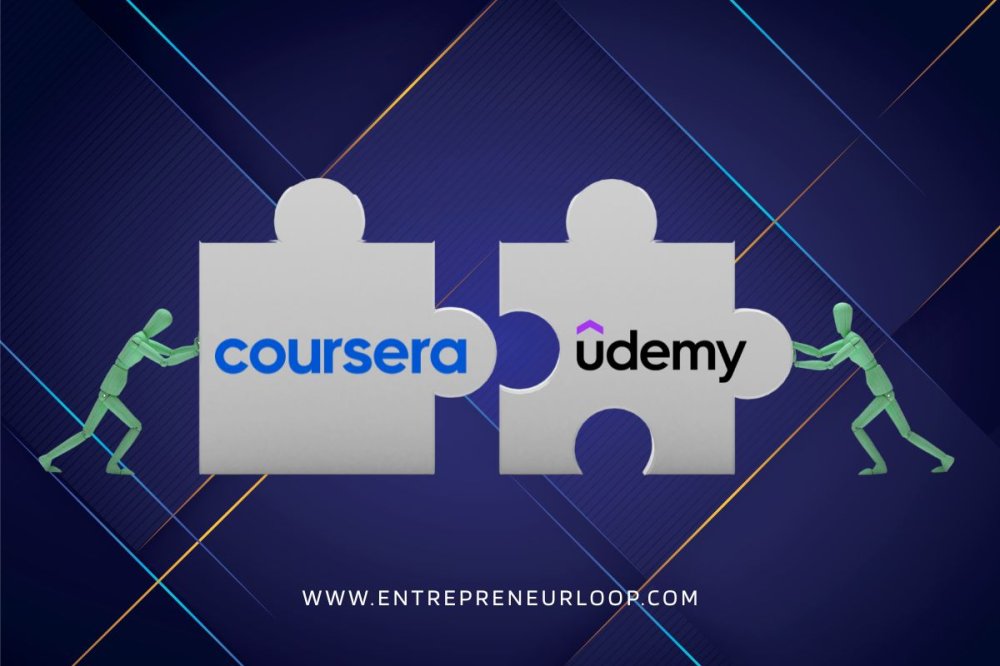
The Coursera-Udemy merger signals a clear shift toward consolidation in global online education, with AI and workforce reskilling at the center. Valued at about $2.5 billion, the deal confirms that large platforms now compete directly with universities in applied domains such as AI, data science, and professional certification. These platforms move faster than traditional degree programs and respond directly to labor market demand, which increases pressure on universities to rethink how applied AI skills fit within formal curricula.
The merged platform combines Coursera’s university-linked credentials with Udemy’s large instructor marketplace, strengthening a skills-first model of education. This model positions short, modular, industry-aligned AI training as an alternative to parts of university education, especially at the postgraduate and professional levels. Universities risk losing relevance in applied skills training unless they integrate such pathways into degree programs in a structured and academically grounded way.
A major consequence of the merger lies in data concentration. The combined company will control one of the largest proprietary datasets on learner behavior, skill acquisition, and AI-supported personalization at scale. This scale validates the effectiveness of AI-driven learning systems, yet limits independent research access. Academic research in intelligent tutoring systems and educational data mining will increasingly depend on negotiated partnerships rather than open datasets, raising questions about transparency and academic autonomy.
Public disclosures emphasize workforce and enterprise learning, not compulsory schooling. While no direct K12 strategy has been announced, indirect effects remain likely. Teacher training, supplementary AI literacy resources, and standardized AI competencies may reach schools through professional development channels. Without public investment, subscription costs and infrastructure demands may widen gaps between education systems with different resource levels.
The merger also reflects a broader conceptual shift. AI no longer appears as a discrete subject to study but as a foundational learning utility embedded across content delivery, assessment, and support. This orientation suggests expanded use of AI-driven personalization and automated tutoring, even if specific systems have not yet been detailed publicly.
Within this context, universities retain a distinct and necessary role. Platforms excel at scaling skills, but they do not replace the university’s capacity to develop critical reasoning, ethical judgment, and epistemic oversight of AI systems. For UE-Varna, the findings reinforce the value of a hybrid strategy that combines selective platform partnerships with strong academic frameworks. Research priorities should focus on human-AI interaction, governance, and the pedagogical limits of automation, ensuring that AI enhances education without narrowing its intellectual scope.
Sources:
https://secure.businesswire.com/news/home/20251217155893/en/Coursera-to-Combine-with-Udemy-to-Empower-the-Global-Workforce-with-Skills-for-the-AI-Era
https://www.reuters.com/business/coursera-udemy-merge-deal-valuing-combined-firm-25-billion-2025-12-17/
For more info contact the Science and Research Institute: https://www.linkedin.com/feed/update/urn:li:activity:7408435886461186048
21 дек 2025